The Horse Whisperer: The Horse Trailer that listens | post-ideas.com
The Horse Whisperer: The Horse Trailer that listens
The idea started on a drive home from a competition.
Like many horse owners, I had transported my horse countless times. I loaded him into the trailer, checked the ramp, made sure he had enough space, and started driving. Everything looked fine.
Three hours later, we arrived. I opened the trailer door and, once again, asked myself the same question I always did:
“How was he during the journey?”
The truth was that I didn't know.
I knew the fuel level of my vehicle. I knew the tire pressure. I knew the outside temperature and exactly how long the trip had taken.
But I knew almost nothing about the horse.
Was he calm or stressed? Was the temperature inside the trailer comfortable? Did he struggle to keep his balance through turns and braking? Was he becoming fatigued? Did he need a break before I realized it?
As horse owners, we care deeply about our animals, yet during transport—the one time we are physically separated from them while still being responsible for their welfare—we are largely relying on assumptions.
Then another thought occurred to me. During the entire journey, my horse was constantly communicating. Through his movements, his behavior, his posture, his breathing, and even the sounds he made. The problem wasn't that he wasn't telling me how he felt.
The problem was that nobody could hear him.
That realization led to a simple question:
What if the trailer could become a horse whisperer?
This question became The Horse Whisperer.
The Horse Whisperer is a smart retrofit system that transforms any horse trailer into an intelligent welfare-monitoring environment. Using a combination of environmental sensors, motion analysis, camera-based monitoring, and integrated microphones, The Horse Whisperer continuously evaluates the horse's condition throughout the journey.
Inside the trailer, sensors measure temperature, humidity, ventilation quality, and trailer movement. A compact camera system observes behavioral indicators such as restlessness, excessive movement, scrambling, or signs of discomfort. Sensitive microphones capture sounds that may indicate stress, agitation, unusual breathing patterns, pawing, or other changes in behavior that would otherwise go unnoticed during transport.
The system analyzes this information in real time and translates it into a simple, easy-to-understand welfare assessment.
Instead of presenting owners with dozens of technical measurements, The Horse Whisperer provides one clear answer:
How is my horse doing right now?
The information is displayed through a dedicated dashboard and mobile app. During transport, owners receive a live Horse Comfort Score along with simple status indicators ranging from comfortable to attention required. If conditions suggest rising stress levels, poor air quality, excessive heat, unusual vocalizations, or concerning behavior, the system immediately alerts the driver and recommends appropriate action.
The goal is not simply to collect data.
The goal is to give horses a voice during transport.
For decades, horse transport has focused on safely moving animals from one location to another. The Horse Whisperer adds a new dimension: understanding the horse's experience along the way.
Because arriving safely is only part of the journey.
Knowing how your horse got there matters too.
The Horse Whisperer is the trailer that listens.
The Horse Whisperer is designed as a retrofit kit that can be installed in most existing horse trailers without major modifications.
The system consists of five core components:
1. Smart Sensor Hub
Mounted inside the trailer, the central sensor hub continuously measures temperature, humidity, air quality, and ventilation conditions. It serves as the brain of the system, collecting and processing information from all connected devices.
2. Interior Camera System
One or two wide-angle cameras are mounted in the upper corners of the trailer. The cameras monitor posture, movement patterns, balance, restlessness, and other behavioral indicators throughout the journey. Using onboard AI, the system identifies signs of discomfort, stress, or unusual activity.
3. Acoustic Monitoring Unit
A set of protected microphones is integrated into the trailer interior. These microphones allow owners to listen to the horse in real time and enable the system to detect behavioral cues such as pawing, kicking, repeated movement, unusual breathing sounds, or vocalizations that may indicate stress or discomfort.
4. Motion & Stability Module
Installed directly on the trailer chassis, this module measures acceleration, braking forces, cornering forces, vibration, and road impact. By combining trailer movement data with the horse's behavior, the system can determine how transport conditions affect the animal's comfort and stability.
5. Driver Dashboard & Mobile App
The driver receives all information through a dedicated dashboard displayed on a smartphone, tablet, or vehicle-mounted screen. Instead of displaying raw sensor data, the system translates complex information into a simple Horse Comfort Score, live welfare indicators, and actionable alerts.
Optional future upgrades may include wearable heart-rate monitoring, automatic climate-control integration, GPS journey analytics, and predictive welfare recommendations based on previous transport experiences.
For a premium version, I would also add one highly visible feature that becomes the product's signature:
Exterior Welfare Light
A small LED status strip mounted on the outside of the trailer.
* Green: Horse comfortable
* Yellow: Elevated stress or environmental concern
* Red: Immediate attention recommended
This gives owners, handlers, and event staff an instant visual indication that the trailer is actively monitoring horse welfare.
From a product-design perspective, the complete retrofit kit would fit into a single box roughly the size of a home-security system package and could likely be installed by a trailer dealer in 1–2 hours. That makes it much easier to commercialize than a completely new trailer.
Please leave a comment and let me know, what you think of my idea. Would you buy it?
Like many horse owners, I had transported my horse countless times. I loaded him into the trailer, checked the ramp, made sure he had enough space, and started driving. Everything looked fine.
Three hours later, we arrived. I opened the trailer door and, once again, asked myself the same question I always did:
“How was he during the journey?”
The truth was that I didn't know.
I knew the fuel level of my vehicle. I knew the tire pressure. I knew the outside temperature and exactly how long the trip had taken.
But I knew almost nothing about the horse.
Was he calm or stressed? Was the temperature inside the trailer comfortable? Did he struggle to keep his balance through turns and braking? Was he becoming fatigued? Did he need a break before I realized it?
As horse owners, we care deeply about our animals, yet during transport—the one time we are physically separated from them while still being responsible for their welfare—we are largely relying on assumptions.
Then another thought occurred to me. During the entire journey, my horse was constantly communicating. Through his movements, his behavior, his posture, his breathing, and even the sounds he made. The problem wasn't that he wasn't telling me how he felt.
The problem was that nobody could hear him.
That realization led to a simple question:
What if the trailer could become a horse whisperer?
This question became The Horse Whisperer.
The Horse Whisperer is a smart retrofit system that transforms any horse trailer into an intelligent welfare-monitoring environment. Using a combination of environmental sensors, motion analysis, camera-based monitoring, and integrated microphones, The Horse Whisperer continuously evaluates the horse's condition throughout the journey.
Inside the trailer, sensors measure temperature, humidity, ventilation quality, and trailer movement. A compact camera system observes behavioral indicators such as restlessness, excessive movement, scrambling, or signs of discomfort. Sensitive microphones capture sounds that may indicate stress, agitation, unusual breathing patterns, pawing, or other changes in behavior that would otherwise go unnoticed during transport.
The system analyzes this information in real time and translates it into a simple, easy-to-understand welfare assessment.
Instead of presenting owners with dozens of technical measurements, The Horse Whisperer provides one clear answer:
How is my horse doing right now?
The information is displayed through a dedicated dashboard and mobile app. During transport, owners receive a live Horse Comfort Score along with simple status indicators ranging from comfortable to attention required. If conditions suggest rising stress levels, poor air quality, excessive heat, unusual vocalizations, or concerning behavior, the system immediately alerts the driver and recommends appropriate action.
The goal is not simply to collect data.
The goal is to give horses a voice during transport.
For decades, horse transport has focused on safely moving animals from one location to another. The Horse Whisperer adds a new dimension: understanding the horse's experience along the way.
Because arriving safely is only part of the journey.
Knowing how your horse got there matters too.
The Horse Whisperer is the trailer that listens.
The Horse Whisperer is designed as a retrofit kit that can be installed in most existing horse trailers without major modifications.
The system consists of five core components:
1. Smart Sensor Hub
Mounted inside the trailer, the central sensor hub continuously measures temperature, humidity, air quality, and ventilation conditions. It serves as the brain of the system, collecting and processing information from all connected devices.
2. Interior Camera System
One or two wide-angle cameras are mounted in the upper corners of the trailer. The cameras monitor posture, movement patterns, balance, restlessness, and other behavioral indicators throughout the journey. Using onboard AI, the system identifies signs of discomfort, stress, or unusual activity.
3. Acoustic Monitoring Unit
A set of protected microphones is integrated into the trailer interior. These microphones allow owners to listen to the horse in real time and enable the system to detect behavioral cues such as pawing, kicking, repeated movement, unusual breathing sounds, or vocalizations that may indicate stress or discomfort.
4. Motion & Stability Module
Installed directly on the trailer chassis, this module measures acceleration, braking forces, cornering forces, vibration, and road impact. By combining trailer movement data with the horse's behavior, the system can determine how transport conditions affect the animal's comfort and stability.
5. Driver Dashboard & Mobile App
The driver receives all information through a dedicated dashboard displayed on a smartphone, tablet, or vehicle-mounted screen. Instead of displaying raw sensor data, the system translates complex information into a simple Horse Comfort Score, live welfare indicators, and actionable alerts.
Optional future upgrades may include wearable heart-rate monitoring, automatic climate-control integration, GPS journey analytics, and predictive welfare recommendations based on previous transport experiences.
For a premium version, I would also add one highly visible feature that becomes the product's signature:
Exterior Welfare Light
A small LED status strip mounted on the outside of the trailer.
* Green: Horse comfortable
* Yellow: Elevated stress or environmental concern
* Red: Immediate attention recommended
This gives owners, handlers, and event staff an instant visual indication that the trailer is actively monitoring horse welfare.
From a product-design perspective, the complete retrofit kit would fit into a single box roughly the size of a home-security system package and could likely be installed by a trailer dealer in 1–2 hours. That makes it much easier to commercialize than a completely new trailer.
Please leave a comment and let me know, what you think of my idea. Would you buy it?
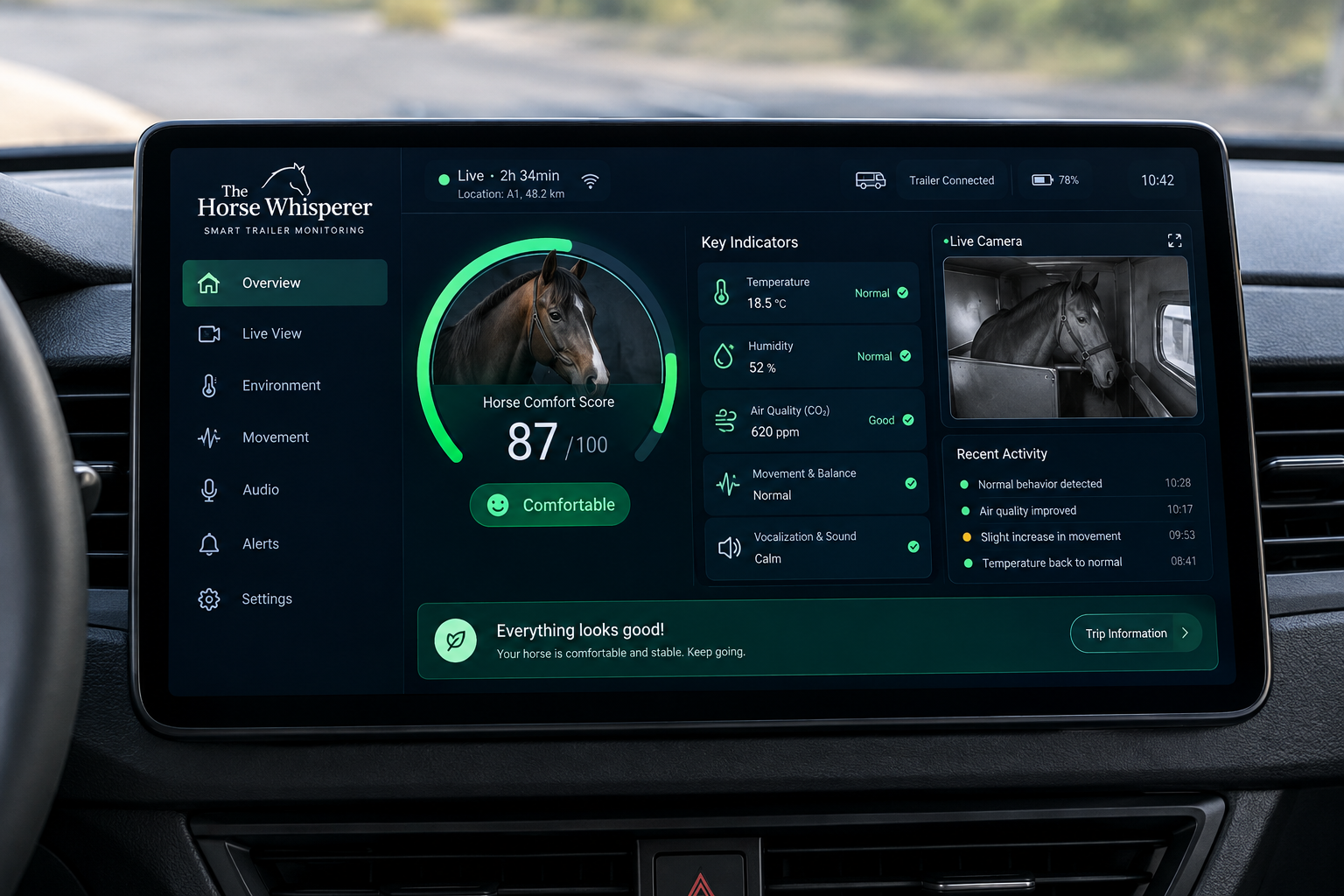
Figure 1.
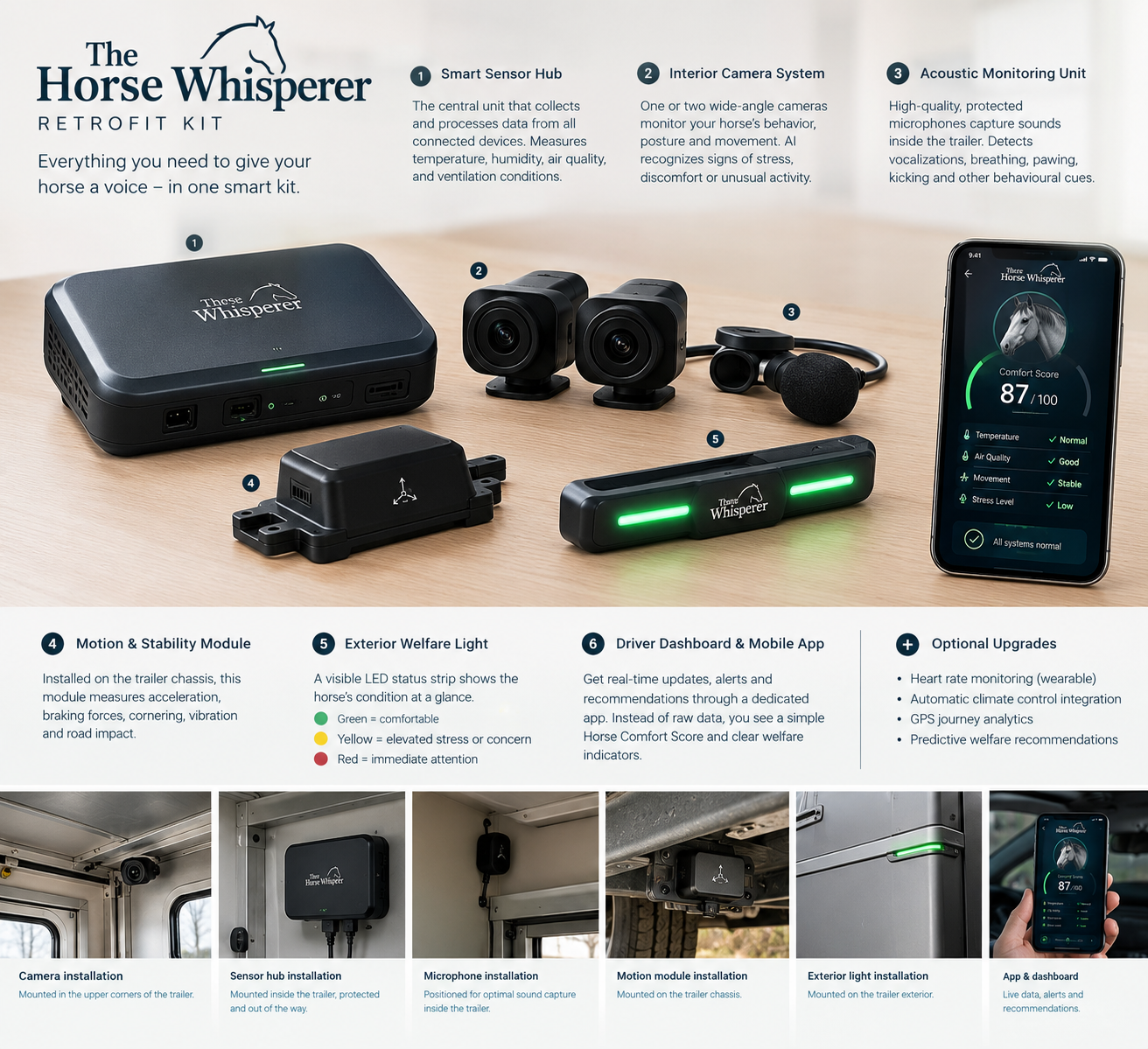
Figure 2.
commentComments
Click here for more information.
No Comments.
Cookies Notice
We use cookies to ensure that we give you the best experience on our website. By continuing to visit this site you agree to our use of cookies.
Click here for more information about the use of cookies on our website.
Click here for more information about the use of cookies on our website.