The Heated Sofa: A Warmer Way to Relax | post-ideas.com
The Heated Sofa: A Warmer Way to Relax
I’ve always thought there was something slightly frustrating about getting comfortable on the sofa in winter. You make yourself a hot drink, put on your favourite film, grab a blanket and finally settle down—only to realize that the sofa itself is freezing.
That was the starting point for an idea I kept coming back to: what if a sofa could provide the same kind of adjustable warmth as the heated seats in a car?
Not a sofa that simply gets warm, but one designed from the beginning to make warmth part of the sitting experience.
THE IDEA
My concept is a contemporary, electrically heated sofa with the appearance of a normal high-quality sofa. The heating technology would be integrated underneath the upholstery, so there would be no obvious wires, heating pads or bulky components visible.
The sofa could be available as a two- or three-seater, with a simple, modern silhouette and generously padded cushions. I imagine rounded edges, deep seating and soft upholstery in materials such as woven fabric or a durable, easy-clean textile.
The overall design would deliberately avoid looking like a piece of specialist technology. From the outside, it would simply look like a comfortable sofa. The difference would only become apparent when you sit down.
HOW WOULD IT WORK?
The heating system would work in a similar way to a heated car seat. Thin electrical heating elements would be integrated into the seat cushions and potentially the lower backrest. These elements could distribute gentle, even heat across the areas where the body makes contact with the sofa. Each seating position could have its own heating zone. This would mean that two people sitting on the same sofa could choose completely different settings. For example, one person might prefer no heating at all, while the other could select a high setting.
The heating could be controlled using a small wireless remote control, with a simple interface designed around three or four temperature levels:
* Level 0 — Off: No heating.
* Level 1 — Gentle: A subtle amount of warmth for longer periods of sitting.
* Level 2 — Comfort: A noticeable, cosy warmth for relaxing on a cold evening.
* Level 3 — High: A stronger burst of heat designed to warm the seating area quickly.
A temperature display on the remote could show the selected level, while an optional timer could automatically switch the heating off after a set period.
MORE THAN JUST A WARM SOFA
The heating would be the main feature, but the concept could incorporate several smaller details that make the sofa feel like a genuinely useful product rather than simply a sofa with a heating pad inside it.
* Independent heating zones: Each seat could have its own heating control. This makes the sofa practical for households where people have different temperature preferences.
* Automatic shut-off: For safety and energy efficiency, the heating system could include an automatic shut-off after a predefined period. The system could also monitor temperature continuously and switch the heating off if an abnormal temperature is detected.
* Integrated USB-C charging: A small USB-C charging port could be built discreetly into the side of each armrest. This would make it possible to charge a phone without having to leave the sofa.
* Remote storage: One small problem with remote controls is that they have a habit of disappearing into cushions. A dedicated magnetic or recessed holder could therefore be integrated into the armrest.
* Removable upholstery: From a manufacturing and maintenance perspective, removable and washable covers would be particularly useful. The electrical components would remain protected within the sofa structure while the outer fabric could be removed for cleaning or replacement.
* Modular design: The sofa could potentially be manufactured as a modular system. Customers could choose a two-seater, three-seater or corner configuration, with compatible heated seat modules used across the range. This would make the concept more commercially realistic because the manufacturer would not necessarily need a completely different heating system for every sofa configuration.
WHAT WOULD THE SOFA ACTUALLY LOOK LIKE?
Visually, I would keep the design understated. I imagine a low-profile sofa with wide armrests, soft cushions and slightly rounded corners. The heating controls would not be permanently built into the front of the sofa because that could make the product look more like a piece of electronic equipment. Instead, the remote would provide the main interface. A small, discreet indicator light on the side of each seat could show when heating is active. It could remain subtle enough that the sofa still feels like a piece of furniture rather than a gadget. The first versions could use neutral colours such as warm grey, beige, dark green or charcoal, allowing the concept to fit naturally into a living room.
HOW I ARRIVED AT THE IDEA
The idea actually came from something very ordinary: being cold while trying to relax. Heated car seats were the obvious comparison. They are a surprisingly simple feature, but they completely change how a car feels on a cold morning. Instead of waiting for the entire vehicle to warm up, you get warmth exactly where you need it. I started wondering why the same principle couldn't be applied to furniture. We already have heated blankets, heated mattresses and heated office chairs. A sofa seemed like a natural next step.
The more I thought about it, the more interesting the idea became. A sofa is already a place where people spend significant amounts of time sitting still. Rather than heating an entire room simply to make one person comfortable, a heated sofa could provide localized warmth directly to the user. That could potentially make the experience more comfortable while avoiding the need to heat an entire living space to the same perceived temperature.
COULD IT ACTUALLY BE MANUFACTURED?
I believe the concept is technically plausible because it would not require inventing an entirely new type of heating technology. The main challenge would be integrating existing low-voltage heating technology safely into a piece of upholstered furniture. The heating elements would need to be positioned so that they provide even warmth without creating uncomfortable hot spots. Electrical connections would need to be protected from movement and wear, while the system would need appropriate temperature monitoring, insulation and safety controls. The electronics could be housed in a protected compartment within the sofa frame, with the heating elements connected to a control module.
From a manufacturing perspective, the product could therefore be approached as a combination of three established areas: Furniture + electric heating + wireless controls. The important part would be engineering those components together properly. A prototype could begin with a single heated seat module. Once the heating performance, comfort, electrical safety and durability had been established, the same module could potentially be incorporated into larger sofa configurations.
THE BIGGER IDEA
For me, the interesting thing about the heated sofa isn't simply the novelty of sitting on something warm. It's the idea of personalized comfort. Modern homes are full of technology that allows us to customize our environment. We can adjust lighting, music, temperature and even the position of our beds. Yet the sofa—the place where many of us spend our evenings—is still largely just a piece of furniture.
A heated sofa could bring a small amount of intelligent functionality into that space without turning the living room into something that feels overly technological. Ultimately, I imagine coming home on a cold evening, sitting down, picking up the remote and choosing my preferred level of warmth.
No blanket. No waiting for the room to heat up. Just press a button—and get comfortable.
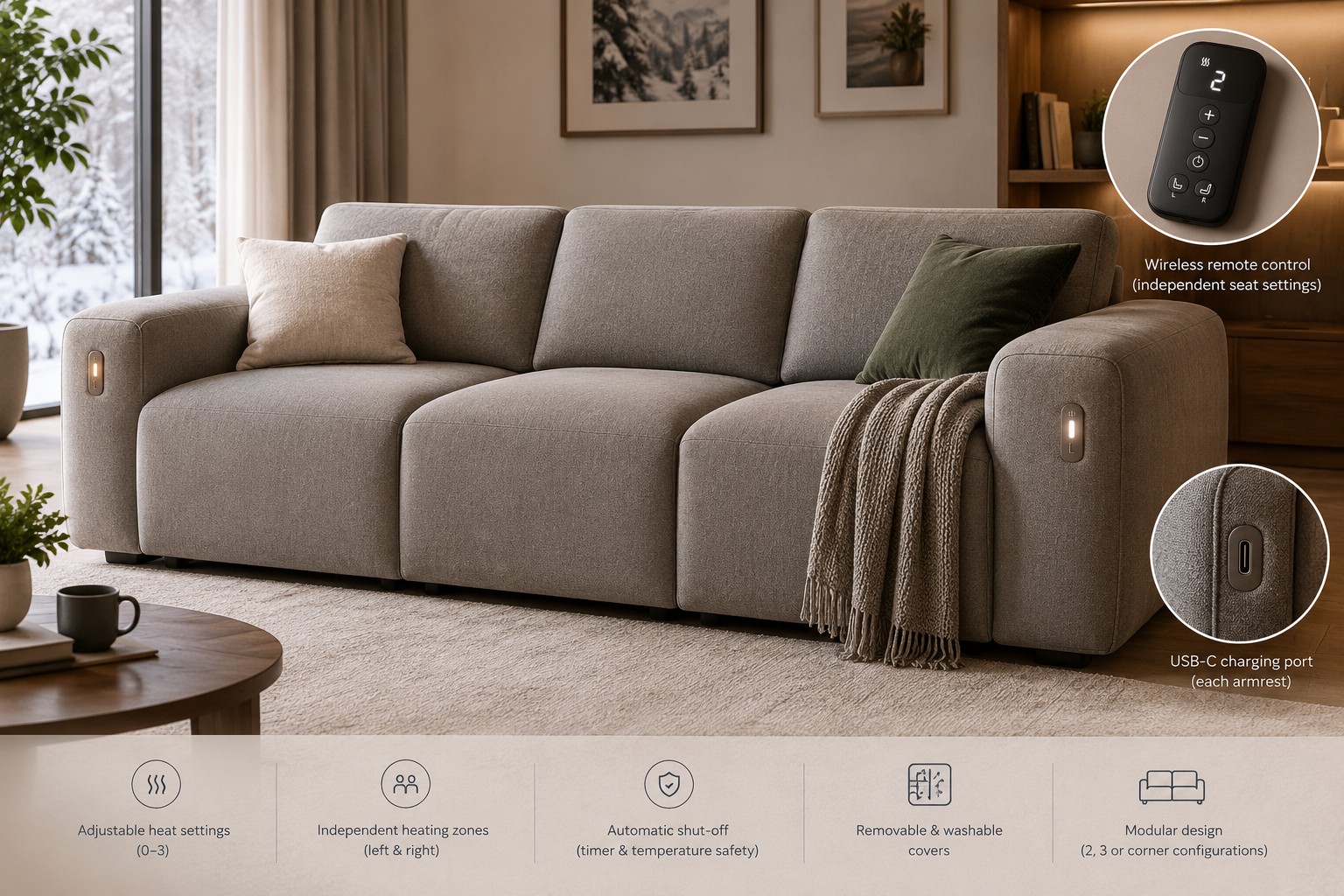
Figure 1.
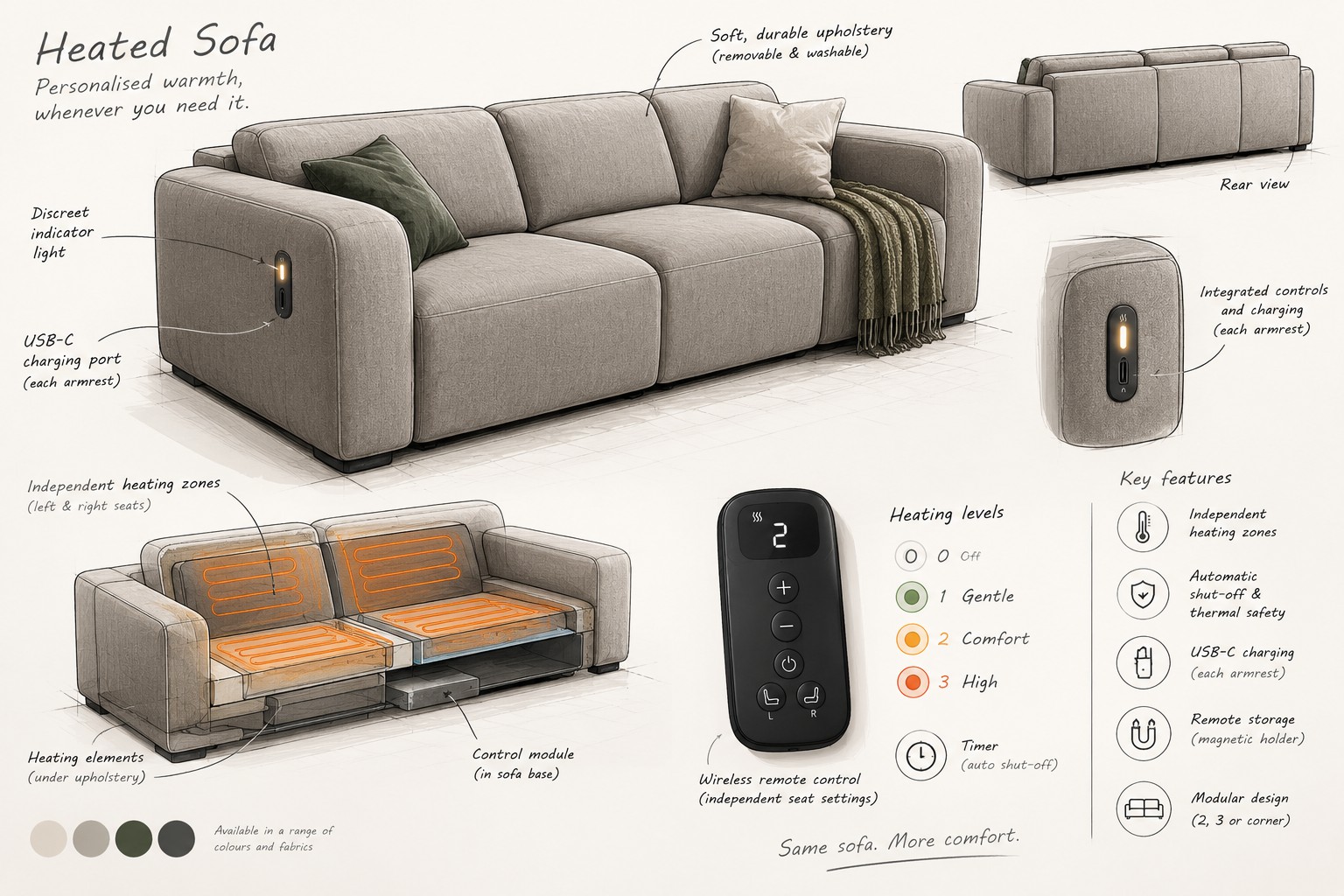
Figure 2.
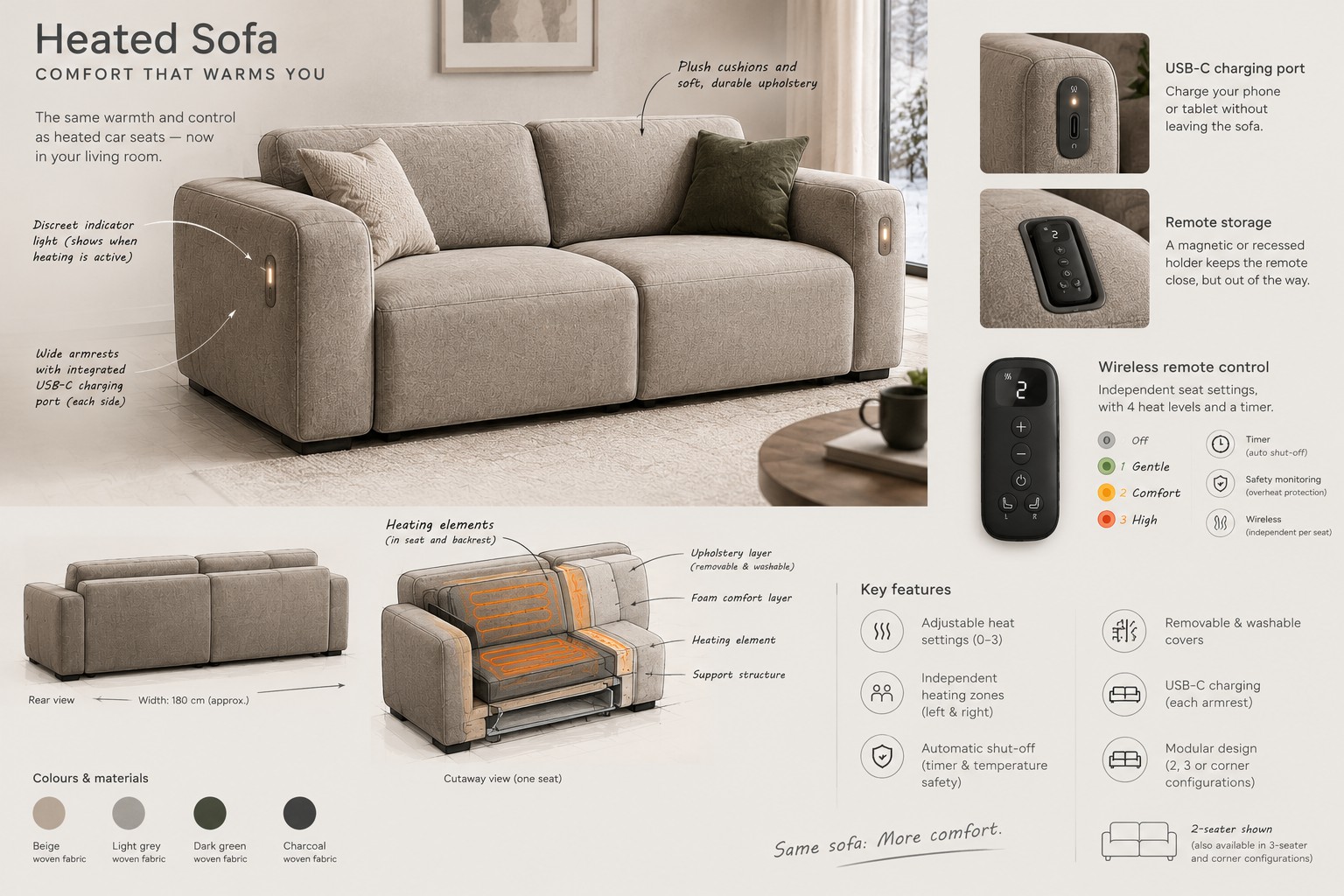
Figure 3.
commentComments
Click here for more information.
No Comments.
Cookies Notice
We use cookies to ensure that we give you the best experience on our website. By continuing to visit this site you agree to our use of cookies.
Click here for more information about the use of cookies on our website.
Click here for more information about the use of cookies on our website.