Eco-friendly Plush Toy Design for Kids | post-ideas.com
Eco-friendly Plush Toy Design for Kids
A viable way to create a plush toy that feels as soft and fluffy as polyester plush while remaining natural, biodegradable, and child-safe is to combine several plant- and animal-derived materials, each optimized for a specific function.
Concept: "CloudNest™" Eco Plush
Outer Fabric (the "fur")
Instead of polyester fleece:
Option A: Organic Cotton Velour
* GOTS-certified organic cotton.
* Brushed repeatedly to create a velvet-like surface.
* Extremely soft and breathable.
* Fully biodegradable.
Option B: Lyocell Plush
* Made from wood pulp (eucalyptus, beech, or spruce).
* Silky, smooth, and naturally moisture-regulating.
* Produced in a closed-loop process with low environmental impact.
* Biodegradable.
Ideal blend:
* 70% Lyocell plush
* 30% Organic cotton velour
This combination can achieve a surprisingly plush, luxurious hand-feel similar to high-quality synthetic plush.
---
Filling (the critical challenge)
Polyester stuffing feels fluffy because its fibers trap air efficiently. Natural alternatives need engineering to match this. Multi-Layer Fill System:
Core Layer
* Kapok fiber (from kapok tree seed pods)
* Naturally lightweight and silky.
* About 8 times lighter than cotton.
* Excellent loft.
Support Layer
* Crimped wool fiber
* Provides resilience and "bounce-back."
* Naturally flame-resistant.
* Antimicrobial.
Softness Layer
* Tencel/Lyocell fiber balls
* Manufactured into small fluffy clusters.
* Mimics polyester cluster filling.
* Biodegradable.
Filling Formula
* 50% Lyocell fiber clusters
* 30% Kapok
* 20% Fine wool
This blend produces:
* Soft compression
* Good recovery after squeezing
* Cloud-like fluffiness
* Fully biodegradable components
---
Safety Features
For infants and toddlers:
✓ Embroidered eyes and facial details (no plastic parts)
✓ Organic cotton sewing thread
✓ Natural plant-based dyes
✓ No PFAS
✓ No flame-retardant chemicals
✓ No microplastic shedding
✓ Machine washable on gentle cycle
---
Structural Design
A layered construction would look like:
1. Soft brushed Lyocell-cotton plush exterior
2. Thin quilted cotton batting layer
3. Lofted natural fiber filling blend
4. Reinforced organic cotton inner liner
This prevents clumping and maintains shape over years of use.
---
Environmental Profile
| Material | Renewable | Biodegradable | Microplastic-Free |
| -------------- | --------- | ------------- | ----------------- |
| Organic Cotton | Yes | Yes | Yes |
| Lyocell | Yes | Yes | Yes |
| Kapok | Yes | Yes | Yes |
| Wool | Yes | Yes | Yes |
Estimated biodegradation:
* Exterior fabric: 6–24 months in industrial composting conditions.
* Filling: 3–12 months.
* No persistent microplastic residue.
---
Product Concept Example
Name: CloudNest Bear
Target age: 0+ months
Weight: 180–250 g
Materials:
* Organic cotton + Lyocell plush shell
* Kapok / wool / Lyocell cluster filling
* Embroidered features
Touch profile:
* Comparable to premium polyester plush toys
* Cooler and more breathable
* Softer with use rather than becoming matted
This approach is achievable with today's materials and manufacturing methods; the main challenge is cost. Such a toy would likely cost 2–4× more to produce than a conventional polyester plush but would eliminate synthetic fibers and microplastic shedding while retaining much of the softness and fluffiness parents expect.
Concept: "CloudNest™" Eco Plush
Outer Fabric (the "fur")
Instead of polyester fleece:
Option A: Organic Cotton Velour
* GOTS-certified organic cotton.
* Brushed repeatedly to create a velvet-like surface.
* Extremely soft and breathable.
* Fully biodegradable.
Option B: Lyocell Plush
* Made from wood pulp (eucalyptus, beech, or spruce).
* Silky, smooth, and naturally moisture-regulating.
* Produced in a closed-loop process with low environmental impact.
* Biodegradable.
Ideal blend:
* 70% Lyocell plush
* 30% Organic cotton velour
This combination can achieve a surprisingly plush, luxurious hand-feel similar to high-quality synthetic plush.
---
Filling (the critical challenge)
Polyester stuffing feels fluffy because its fibers trap air efficiently. Natural alternatives need engineering to match this. Multi-Layer Fill System:
Core Layer
* Kapok fiber (from kapok tree seed pods)
* Naturally lightweight and silky.
* About 8 times lighter than cotton.
* Excellent loft.
Support Layer
* Crimped wool fiber
* Provides resilience and "bounce-back."
* Naturally flame-resistant.
* Antimicrobial.
Softness Layer
* Tencel/Lyocell fiber balls
* Manufactured into small fluffy clusters.
* Mimics polyester cluster filling.
* Biodegradable.
Filling Formula
* 50% Lyocell fiber clusters
* 30% Kapok
* 20% Fine wool
This blend produces:
* Soft compression
* Good recovery after squeezing
* Cloud-like fluffiness
* Fully biodegradable components
---
Safety Features
For infants and toddlers:
✓ Embroidered eyes and facial details (no plastic parts)
✓ Organic cotton sewing thread
✓ Natural plant-based dyes
✓ No PFAS
✓ No flame-retardant chemicals
✓ No microplastic shedding
✓ Machine washable on gentle cycle
---
Structural Design
A layered construction would look like:
1. Soft brushed Lyocell-cotton plush exterior
2. Thin quilted cotton batting layer
3. Lofted natural fiber filling blend
4. Reinforced organic cotton inner liner
This prevents clumping and maintains shape over years of use.
---
Environmental Profile
| Material | Renewable | Biodegradable | Microplastic-Free |
| -------------- | --------- | ------------- | ----------------- |
| Organic Cotton | Yes | Yes | Yes |
| Lyocell | Yes | Yes | Yes |
| Kapok | Yes | Yes | Yes |
| Wool | Yes | Yes | Yes |
Estimated biodegradation:
* Exterior fabric: 6–24 months in industrial composting conditions.
* Filling: 3–12 months.
* No persistent microplastic residue.
---
Product Concept Example
Name: CloudNest Bear
Target age: 0+ months
Weight: 180–250 g
Materials:
* Organic cotton + Lyocell plush shell
* Kapok / wool / Lyocell cluster filling
* Embroidered features
Touch profile:
* Comparable to premium polyester plush toys
* Cooler and more breathable
* Softer with use rather than becoming matted
This approach is achievable with today's materials and manufacturing methods; the main challenge is cost. Such a toy would likely cost 2–4× more to produce than a conventional polyester plush but would eliminate synthetic fibers and microplastic shedding while retaining much of the softness and fluffiness parents expect.
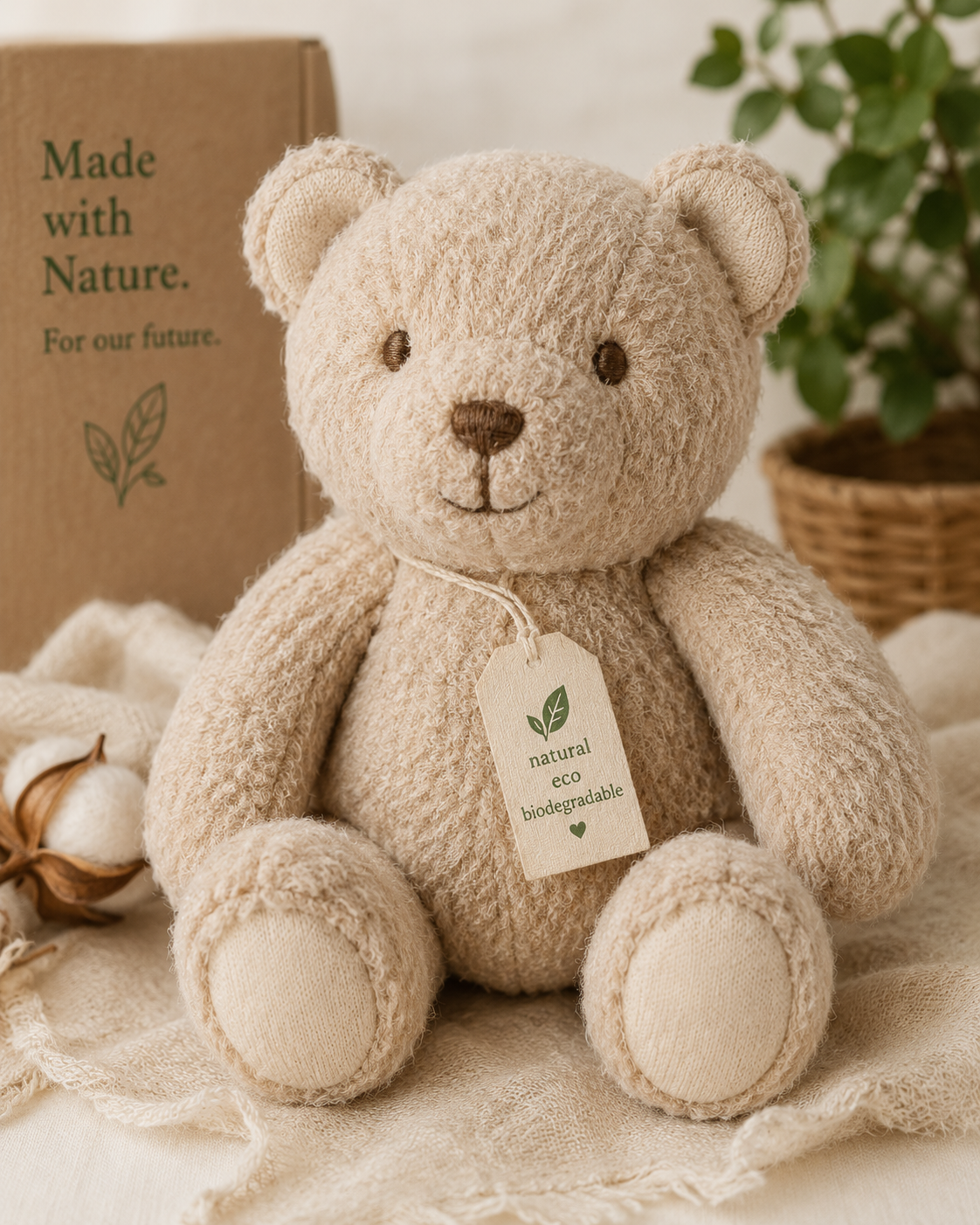
Figure 1.
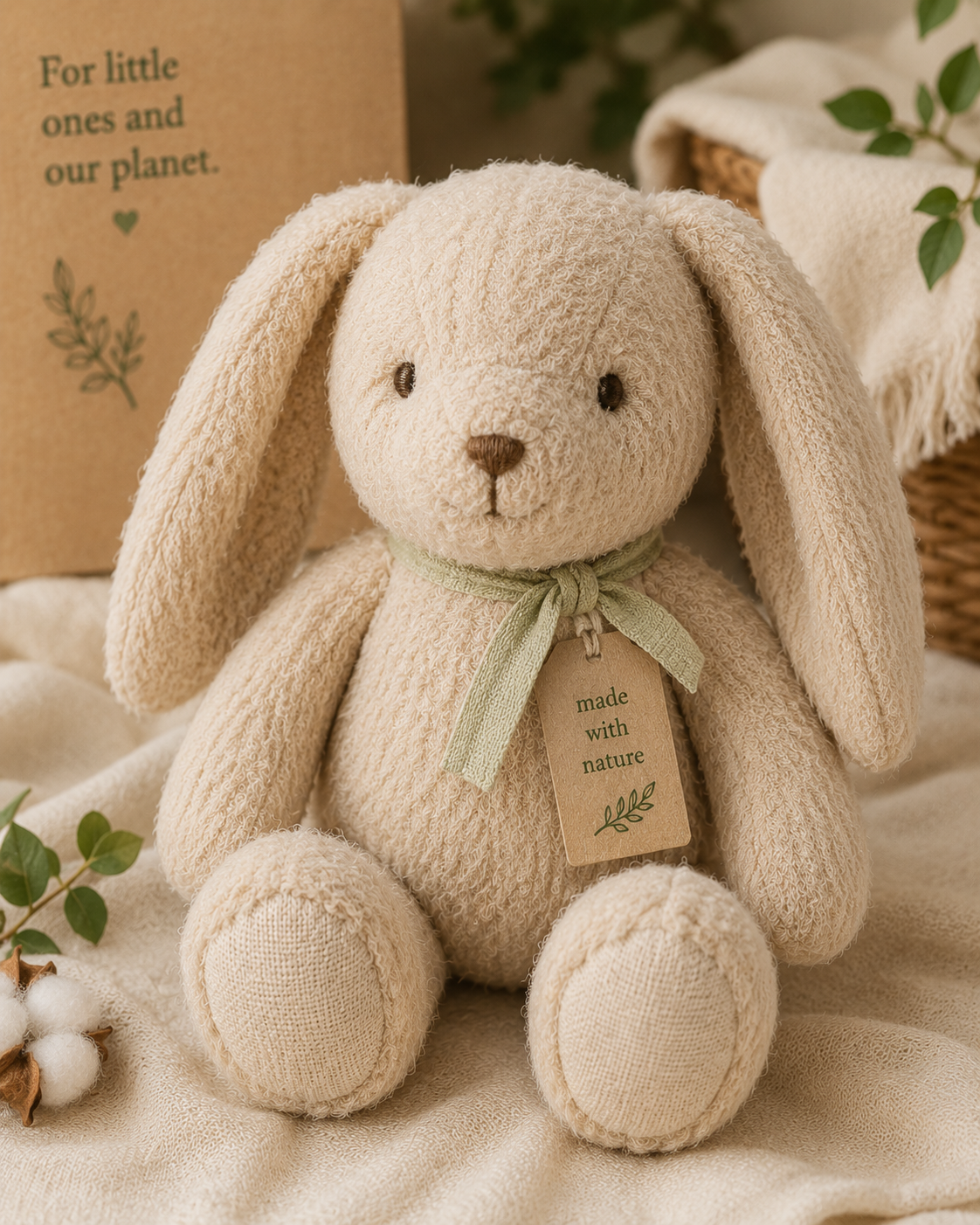
Figure 2.
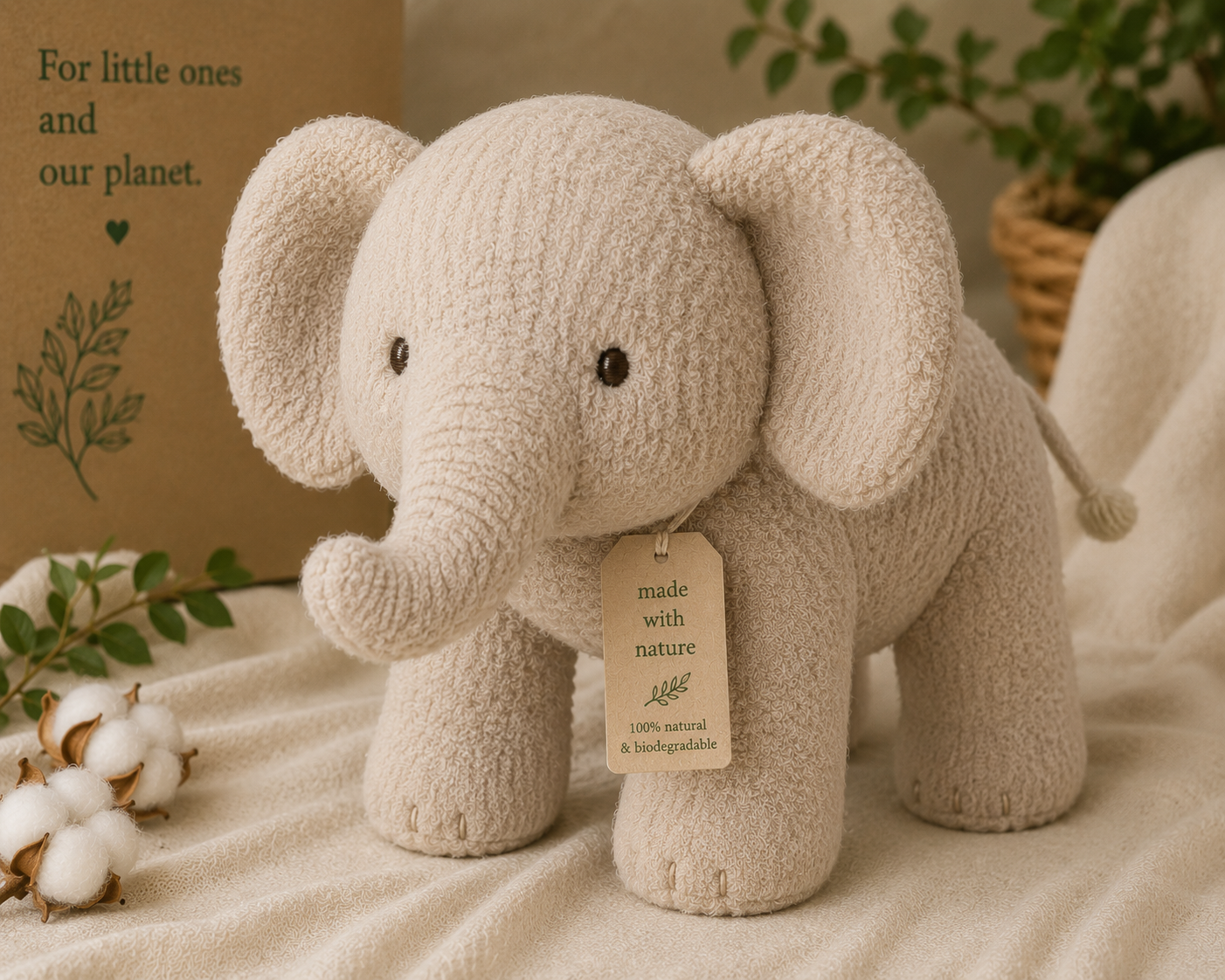
Figure 3.
commentComments
Click here for more information.
No Comments.
Cookies Notice
We use cookies to ensure that we give you the best experience on our website. By continuing to visit this site you agree to our use of cookies.
Click here for more information about the use of cookies on our website.
Click here for more information about the use of cookies on our website.