AERIS Glide — Personal Electric Hovercraft | post-ideas.com
AERIS Glide — Personal Electric Hovercraft
The personal electric hovercraft “AERIS Glide” is not just a redesign of a motorcycle. It functions like a motorcycle (compact, agile, 1–2 people) but looks and feels completely different.
Here’s a concept design for an electric hovercraft that:
* Seats 1 to 2 passengers
* Does not resemble a motorcycle
* Features an innovative, independent vehicle design
Core Idea:
A single-track hover vehicle that rides on a controlled air cushion, with active stabilization instead of wheels. It blends:
* Hovercraft physics (air cushion lift)
* Drone-like control systems (stability + thrust vectoring)
* Motorcycle-like footprint (narrow, urban-friendly)
But visually? It looks more like a floating capsule or sci-fi pod than anything with wheels.
---
1. Overall Form & Aesthetic
Shape
* Low-slung, elongated oval body
* Smooth, continuous shell (no exposed mechanics)
* Slightly wider in the middle, tapering front and rear
* Rider sits inside rather than on top
Think:
* A cross between a futuristic sled, cockpit pod, and levitating board
Visual Identity
* No wheels, no fork, no handlebars
* No visible drivetrain
* Floating appearance (hidden skirt + recessed airflow)
Materials:
* Matte composite shell (carbon fiber + polymer)
* Soft underglow lighting ring (for visibility + “hover” illusion)
---
2. Rider Configuration
Seating
* Semi-reclined “pilot” position
* Feet forward (like a luge or recumbent seat)
* Adjustable second seat (fold-out behind primary rider)
Controls
Replace handlebars with:
* Dual side control grips (like aircraft throttles)
* Thumb joysticks or pressure-sensitive pads
Optional:
* Lean detection (body movement influences direction slightly)
Display:
* Augmented HUD in visor OR compact dashboard strip
---
3. Lift System (Hover Mechanism)
Air Cushion System
* High-efficiency electric ducted fans (EDFs) pull air in and force it downward
* Flexible skirt hidden under body creates cushion
Layout:
* 2–4 lift fans centrally located
* Air distribution channels for even pressure
Hover height:
* ~5–15 cm above ground
Key Innovation
* Dynamic cushion control
* Sensors adjust pressure per zone
* Keeps vehicle level even when rider shifts weight
---
4. Propulsion System
Thrust
Two main approaches:
Option A: Rear Thrust Fan
* One large rear ducted fan
* Vectoring nozzle for steering assist
Option B: Distributed Micro-Thrusters
* Multiple smaller fans around perimeter
* Enables precise directional control
---
5. Stability & Control
Since there are no wheels, stability is everything.
Active Stabilization System
* IMU sensors (like drones)
* AI-assisted balance control
* Gyroscopic stabilization (optional internal flywheel)
Control Inputs
* Side grips → speed + direction
* Subtle body lean → fine steering
* Computer handles micro-adjustments
---
6. Road Suitability (Critical Challenge)
Hovercrafts don’t naturally belong on roads, so:
Surface Handling
* Works best on:
* Asphalt
* Concrete
* Struggles on:
* Gravel, uneven terrain
Solutions
* Micro-skirt segmentation for uneven surfaces
* Adaptive lift pressure zones
* Emergency retractable micro-wheels for:
* Parking
* Very low-speed stabilization
---
7. Power System
* Battery pack integrated into floor
* Low center of gravity
Specs (conceptual):
* Range: 80–150 km
* Top speed: ~80–120 km/h
* Fast charging capability
---
8. Sound & Presence
* Quiet but not silent (fan noise)
* Tuned acoustic signature for safety (like EV sound design)
---
9. Safety Features
* Auto-hover stabilization (won’t tip over)
* Emergency descent (controlled drop if power fails)
* Collision sensors + auto braking
* Enclosed rider shell for protection
---
10. Design Language (What Makes It Unique)
This is where it truly avoids motorcycle resemblance:
Key Differences
❌ No wheels
❌ No exposed frame
❌ No straddling posture
❌ No handlebars
-> Instead:
✅ Enclosed “pod” cockpit
✅ Floating body with soft edges
✅ Aircraft/drone-inspired control logic
✅ Symmetrical, organic geometry
---
11. Variants
Solo Urban Version
* Ultra-compact
* Minimal cockpit
Dual Rider Version
* Extended body
* Tandem seating
Cargo Version
* Replace rear seat with storage module
---
Reality Check (Important)
Making this road-legal in places like Germany would be extremely difficult because:
* Road laws assume wheeled vehicles
* Braking and traction standards are wheel-based
* Hovercrafts fall into a regulatory gray zone
So this would likely start as:
* Experimental vehicle
* Private roads / special zones
* Future urban mobility category
-> Below we see a visual representation of this concept.
Here’s a concept design for an electric hovercraft that:
* Seats 1 to 2 passengers
* Does not resemble a motorcycle
* Features an innovative, independent vehicle design
Core Idea:
A single-track hover vehicle that rides on a controlled air cushion, with active stabilization instead of wheels. It blends:
* Hovercraft physics (air cushion lift)
* Drone-like control systems (stability + thrust vectoring)
* Motorcycle-like footprint (narrow, urban-friendly)
But visually? It looks more like a floating capsule or sci-fi pod than anything with wheels.
---
1. Overall Form & Aesthetic
Shape
* Low-slung, elongated oval body
* Smooth, continuous shell (no exposed mechanics)
* Slightly wider in the middle, tapering front and rear
* Rider sits inside rather than on top
Think:
* A cross between a futuristic sled, cockpit pod, and levitating board
Visual Identity
* No wheels, no fork, no handlebars
* No visible drivetrain
* Floating appearance (hidden skirt + recessed airflow)
Materials:
* Matte composite shell (carbon fiber + polymer)
* Soft underglow lighting ring (for visibility + “hover” illusion)
---
2. Rider Configuration
Seating
* Semi-reclined “pilot” position
* Feet forward (like a luge or recumbent seat)
* Adjustable second seat (fold-out behind primary rider)
Controls
Replace handlebars with:
* Dual side control grips (like aircraft throttles)
* Thumb joysticks or pressure-sensitive pads
Optional:
* Lean detection (body movement influences direction slightly)
Display:
* Augmented HUD in visor OR compact dashboard strip
---
3. Lift System (Hover Mechanism)
Air Cushion System
* High-efficiency electric ducted fans (EDFs) pull air in and force it downward
* Flexible skirt hidden under body creates cushion
Layout:
* 2–4 lift fans centrally located
* Air distribution channels for even pressure
Hover height:
* ~5–15 cm above ground
Key Innovation
* Dynamic cushion control
* Sensors adjust pressure per zone
* Keeps vehicle level even when rider shifts weight
---
4. Propulsion System
Thrust
Two main approaches:
Option A: Rear Thrust Fan
* One large rear ducted fan
* Vectoring nozzle for steering assist
Option B: Distributed Micro-Thrusters
* Multiple smaller fans around perimeter
* Enables precise directional control
---
5. Stability & Control
Since there are no wheels, stability is everything.
Active Stabilization System
* IMU sensors (like drones)
* AI-assisted balance control
* Gyroscopic stabilization (optional internal flywheel)
Control Inputs
* Side grips → speed + direction
* Subtle body lean → fine steering
* Computer handles micro-adjustments
---
6. Road Suitability (Critical Challenge)
Hovercrafts don’t naturally belong on roads, so:
Surface Handling
* Works best on:
* Asphalt
* Concrete
* Struggles on:
* Gravel, uneven terrain
Solutions
* Micro-skirt segmentation for uneven surfaces
* Adaptive lift pressure zones
* Emergency retractable micro-wheels for:
* Parking
* Very low-speed stabilization
---
7. Power System
* Battery pack integrated into floor
* Low center of gravity
Specs (conceptual):
* Range: 80–150 km
* Top speed: ~80–120 km/h
* Fast charging capability
---
8. Sound & Presence
* Quiet but not silent (fan noise)
* Tuned acoustic signature for safety (like EV sound design)
---
9. Safety Features
* Auto-hover stabilization (won’t tip over)
* Emergency descent (controlled drop if power fails)
* Collision sensors + auto braking
* Enclosed rider shell for protection
---
10. Design Language (What Makes It Unique)
This is where it truly avoids motorcycle resemblance:
Key Differences
❌ No wheels
❌ No exposed frame
❌ No straddling posture
❌ No handlebars
-> Instead:
✅ Enclosed “pod” cockpit
✅ Floating body with soft edges
✅ Aircraft/drone-inspired control logic
✅ Symmetrical, organic geometry
---
11. Variants
Solo Urban Version
* Ultra-compact
* Minimal cockpit
Dual Rider Version
* Extended body
* Tandem seating
Cargo Version
* Replace rear seat with storage module
---
Reality Check (Important)
Making this road-legal in places like Germany would be extremely difficult because:
* Road laws assume wheeled vehicles
* Braking and traction standards are wheel-based
* Hovercrafts fall into a regulatory gray zone
So this would likely start as:
* Experimental vehicle
* Private roads / special zones
* Future urban mobility category
-> Below we see a visual representation of this concept.
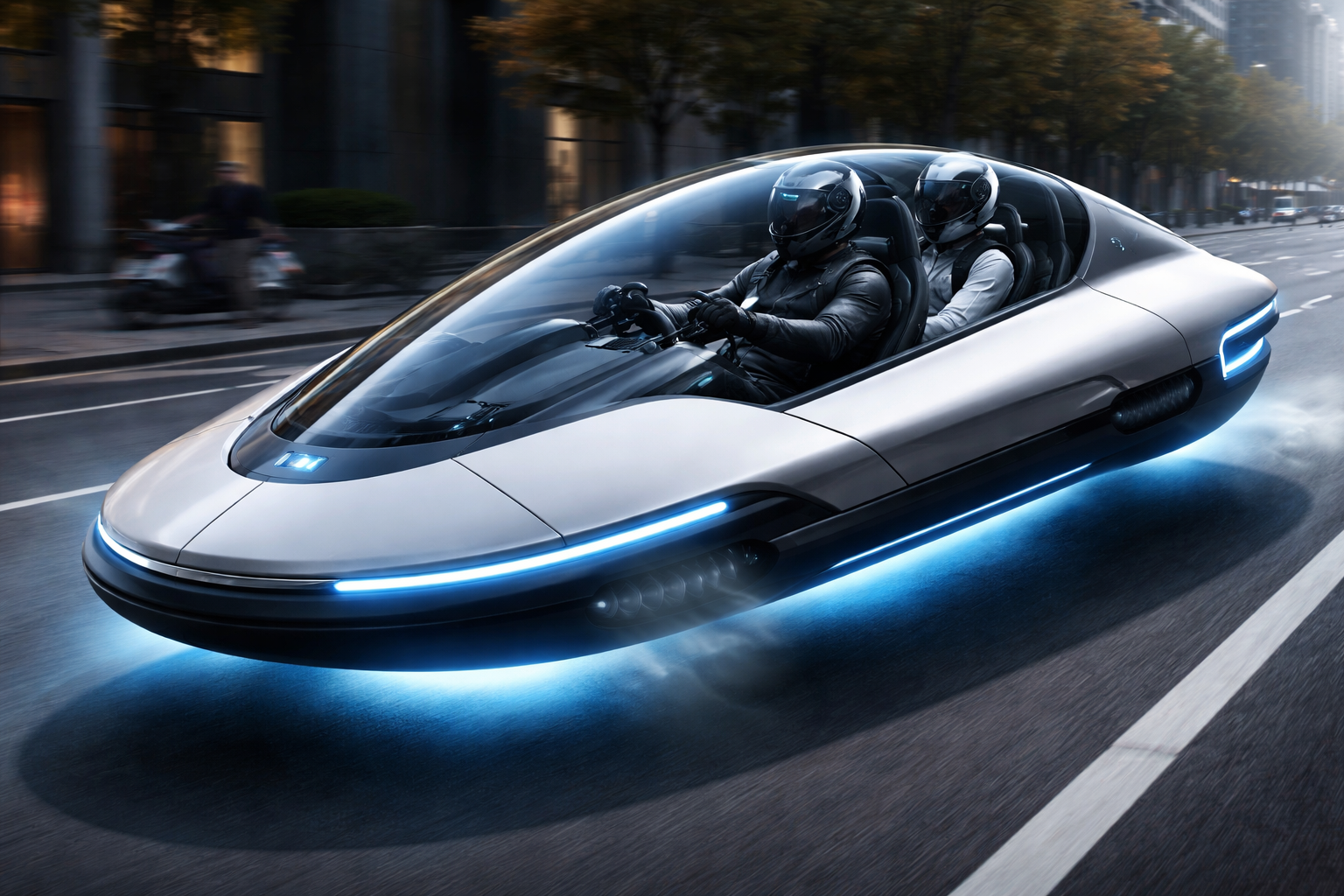
Figure 1.
commentComments
Click here for more information.
No Comments.
Cookies Notice
We use cookies to ensure that we give you the best experience on our website. By continuing to visit this site you agree to our use of cookies.
Click here for more information about the use of cookies on our website.
Click here for more information about the use of cookies on our website.